What is the difference between bail and anticipatory bail under Indian law?
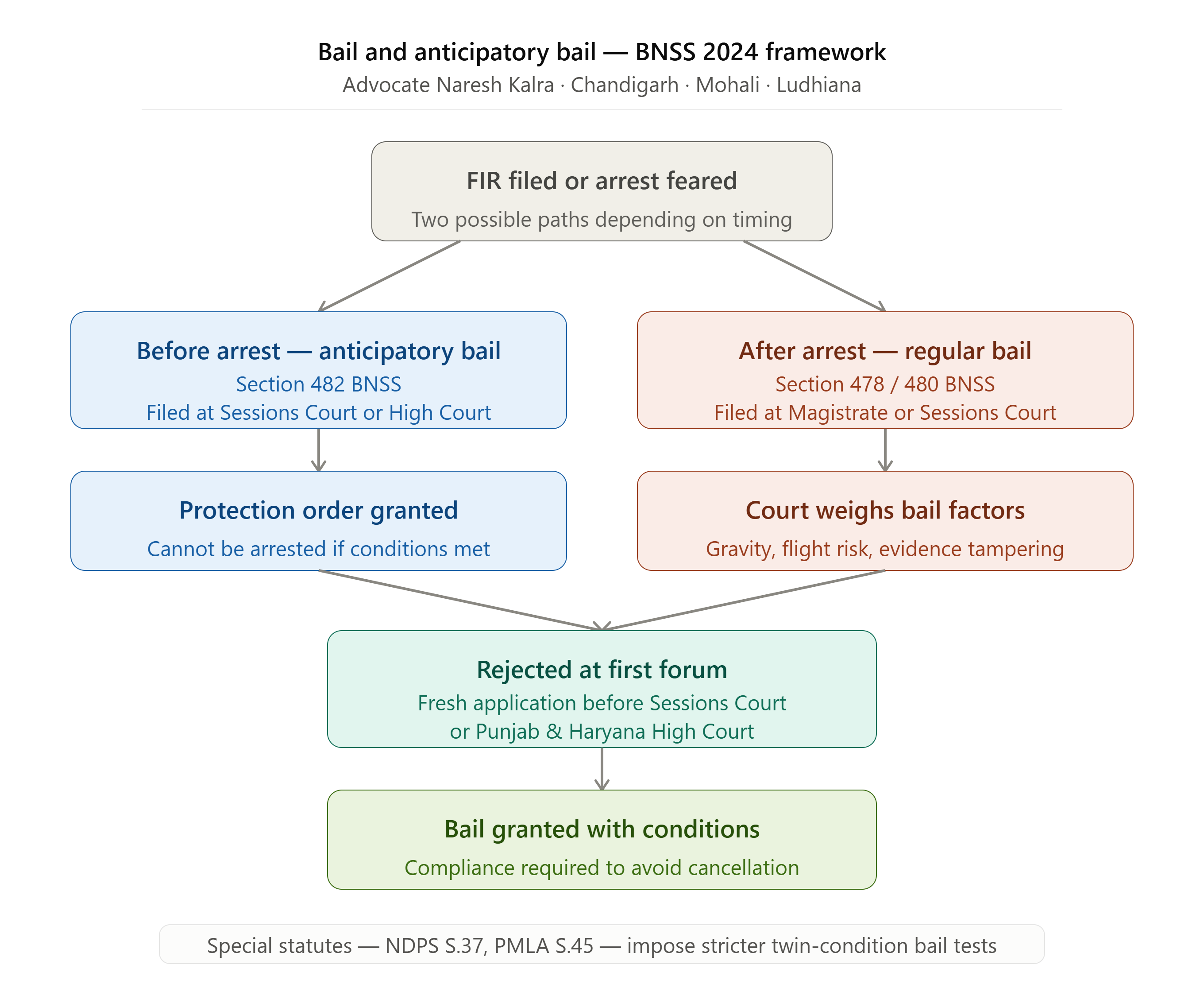
Bail is relief granted after a person has been arrested, allowing temporary release from custody with an obligation to appear before the court as required. Anticipatory bail, now governed by Section 482 of the BNSS 2024 (formerly Section 438 CrPC), is a pre-arrest remedy — a person who genuinely apprehends arrest for a non-bailable offence can approach the Sessions Court or High Court in advance, and if granted, cannot be arrested by police for that offence without following the court's specified conditions. Our team in Chandigarh assesses which remedy fits your situation within the first consultation.
How quickly can an anticipatory bail application be filed in India?
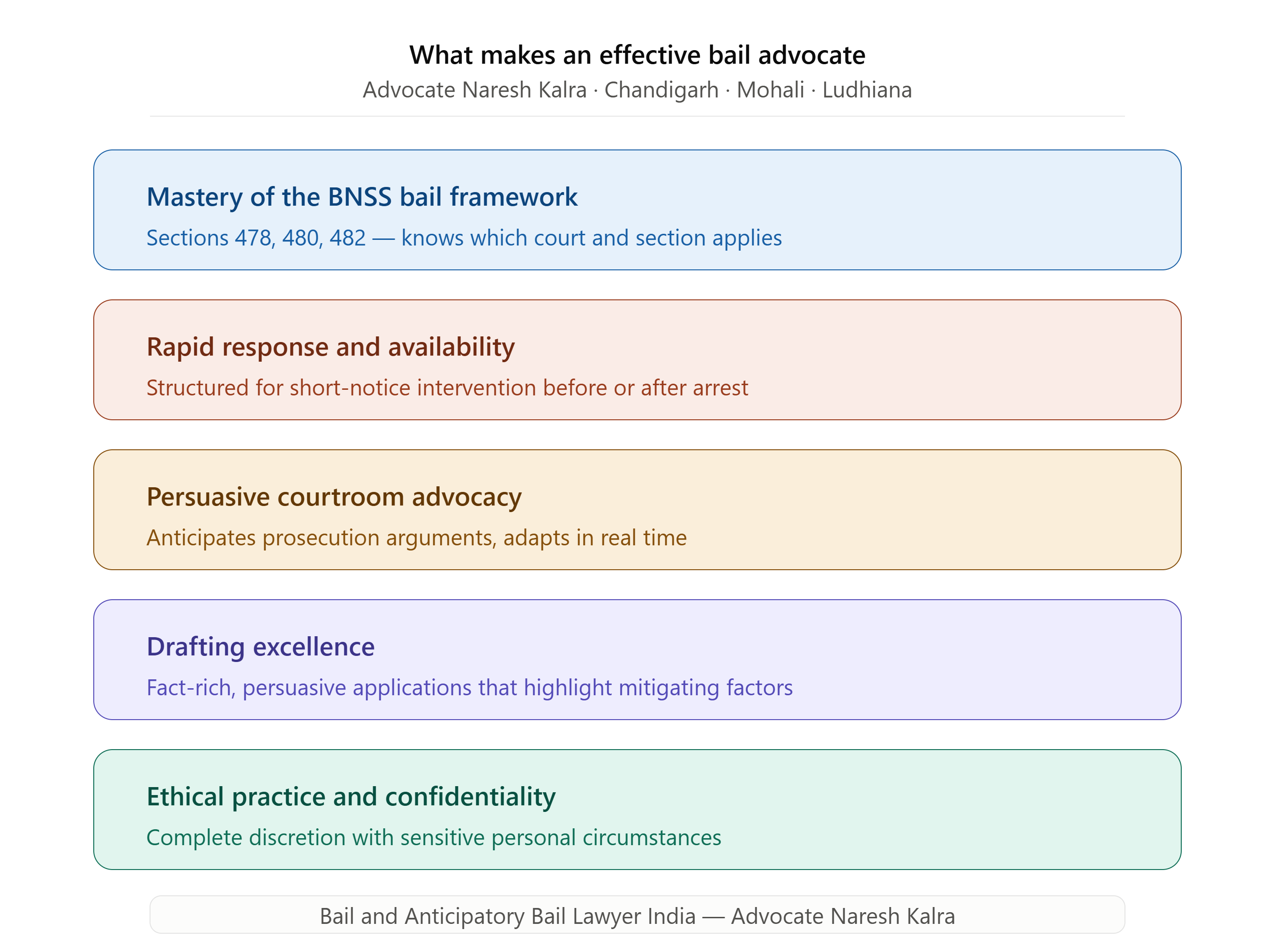
An anticipatory bail application can, in urgent situations, be drafted and filed within hours of being engaged, particularly where arrest appears imminent. Courts in Chandigarh, Mohali, and Ludhiana can list urgent anticipatory bail matters for hearing on short notice where genuine urgency is demonstrated. Our Anticipatory Bail Lawyer India team maintains readiness for exactly these emergency filings, since delay in a genuine arrest-risk situation can be irreversible.
Can anticipatory bail be cancelled after it is granted?
Yes. Anticipatory bail can be cancelled if the accused violates any condition imposed by the court, tampers with evidence, threatens or influences witnesses, or absconds. Following Sushila Aggarwal (2020), anticipatory bail can extend until the end of trial, but this protection is conditional on continued compliance. Our team ensures clients fully understand every condition attached to their bail order to avoid any risk of cancellation.
Is anticipatory bail available for NDPS or PMLA cases?
Anticipatory bail and regular bail are available for offences under the NDPS Act and PMLA, but both statutes impose a stricter twin-condition test under Section 37 NDPS Act and Section 45 PMLA respectively — the court must find reasonable grounds to believe the accused is not guilty and unlikely to reoffend while on bail. This is a materially higher bar than standard BNSS bail. Our NDPS Bail Lawyer India and PMLA Lawyer India teams in Chandigarh have specific experience meeting this heightened evidentiary standard.
What happens if bail is rejected by the Magistrate's Court?
If bail is rejected at the Magistrate's Court level under Section 478 BNSS, the applicant can move a fresh application before the Sessions Court under Section 480 BNSS, and if necessary, before the Punjab & Haryana High Court. Each level involves a fresh assessment of the facts, and often a stronger, more detailed application supported by additional legal argument. Our Sessions Court Bail Lawyer India team in Chandigarh and Ludhiana regularly secures relief at the Sessions Court stage even after an initial rejection.
What factors do courts consider when deciding a bail application in India?
Courts weigh several factors: the gravity and nature of the alleged offence, the risk that the accused may abscond, the possibility of evidence tampering or witness influence, the accused's prior criminal record if any, the stage of investigation, and their conduct and cooperation during the process. Following Satender Kumar Antil vs CBI (2022), courts are also directed to avoid unnecessary custodial detention where the offence does not genuinely require it. Our Bail Application Lawyer India team builds every application around these specific evaluative factors.